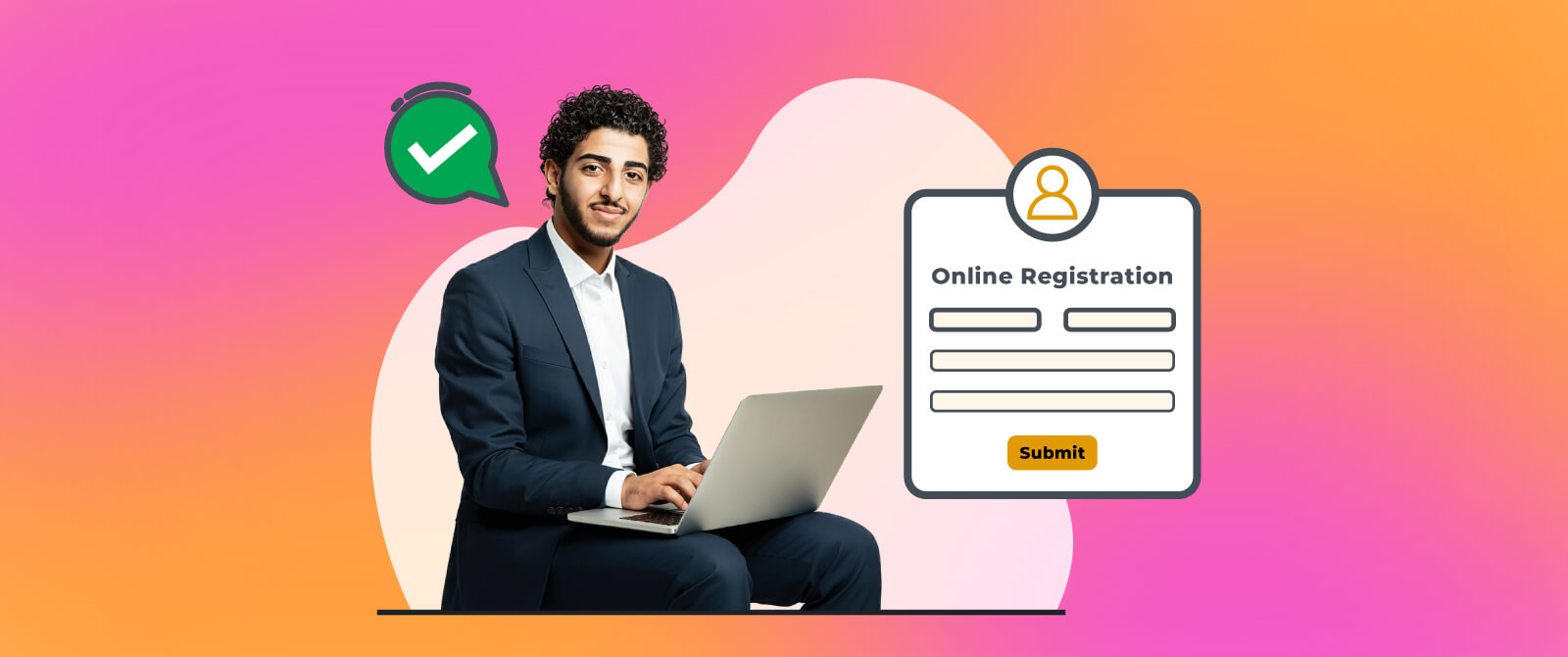
Why Some Registrations Get Confirmed and Others Don't
Here's something most people never realise: for the best events, hitting "Register" is only a request — not a guaranteed seat. Curated meetups, flagship conferences, CXO roundtables, founder dinners and invite-only sessions almost always have an organiser reviewing every applicant before sending the confirmation email. Seats are limited, and organisers want the right room, not just a full room.
That means two people can apply to the exact same event and get completely different outcomes — one gets an instant approval, the other never hears back. The difference usually isn't luck. It's how they registered.
The good news: the signals organisers look for are predictable, and you control almost all of them. Optimise your registration and you dramatically raise your event registration confirmation odds — often turning a silent rejection into a same-day approval. Below is the exact playbook.
1. Register With Your Corporate Email — Never a Free One
This is the single biggest factor, and the easiest to get wrong.
When you sign up with a personal address like Gmail, Yahoo, Outlook, Zoho or iCloud, the organiser has no way to verify who you are or where you work. From their side, you're an anonymous name — indistinguishable from a bot, a scraper, a competitor, or someone who'll never show up. Many curated events auto-reject free-email registrations for exactly this reason.
A corporate/work email ([email protected]) instantly does three things:
- Proves your identity and employer — the domain itself is verification.
- Signals genuine intent — people rarely use their work email for things they won't attend.
- Tells the organiser your professional context — which company, which industry, which seniority tier.
If your company gives you an email address, use it every single time. It's the fastest trust signal you have.
2. Your Designation Matters — Seniority Raises Approval Rates
Organisers curate for the value in the room. A gathering of decision-makers, senior operators and founders is worth more to every attendee than a room of unverified strangers — so applications from more senior designations are approved at noticeably higher rates.
You don't need to inflate your title (never do that — it's easy to check on LinkedIn). But you should:
- State your role accurately and completely. "Senior Product Manager, Payments" beats a blank or vague "Product" field.
- Highlight decision-making scope where the form allows — team size, budget ownership, or the problems you're responsible for.
- Lead with your most relevant seniority. If you founded something, advise startups, or lead a function, say so.
The clearer your professional standing, the easier it is for an organiser to say yes. Every field you leave blank is a reason for them to hesitate — and hesitation, when seats are scarce, usually means rejection.
3. Keep Your LinkedIn Updated — It's Your Real Application
When an organiser is deciding whether to approve you, the first thing many of them do is open your LinkedIn profile. It's the modern reference check. If your profile is outdated, empty, or contradicts what you entered on the form, that's an instant red flag.
Before you register for anything important, make sure your LinkedIn:
- Shows your current role and company (matching your corporate email and the form).
- Has a clear photo and headline — a blank or default profile reads as low-effort or fake.
- Reflects your actual experience — a few lines about what you do builds instant credibility.
A strong, current profile does the persuading for you. A weak or missing one makes even a legitimate registration look risky. If you fill in a LinkedIn URL on the form, make sure it's one you'd be happy for the organiser to read.
4. Register Early — Before the Room Fills
Timing is quietly decisive. The best events fill their limited seats on a rolling basis, and once the room is near capacity, organisers get far more selective — or simply close approvals altogether. The same application that would have been approved on day one gets waitlisted on day ten.
Registering early helps you in three ways:
- More open seats means a lower bar for approval.
- You're evaluated against a smaller pool, not fighting for the last spot.
- It signals genuine interest — early registrants are seen as more committed and more likely to actually attend.
Turn on alerts for the communities and platforms you care about so you see announcements the moment they go live. Speed is an advantage almost nobody uses — which is exactly why it works.
5. Small Details That Tip the Decision
Once the big four are handled, a few finishing touches push borderline applications over the line:
- Fill in every optional field. A complete form always beats a half-empty one.
- Use your real full name — matching your email and LinkedIn. Consistency builds trust.
- Add a genuine reason for attending if there's a free-text box. One honest sentence about what you hope to get or give is memorable.
- Don't mass-register and no-show. Organisers track attendance; a history of registering and ghosting will get you quietly deprioritised for future events.
Your Pre-Registration Checklist
Before you submit your next application, run through this:
- ✅ Corporate email, not Gmail/Yahoo/Zoho/Outlook.
- ✅ Accurate, complete designation — seniority and scope visible.
- ✅ LinkedIn updated and matching your form details.
- ✅ Registered early, while seats are open.
- ✅ Every field filled, real name, honest intent.
Nail these and you flip the odds decisively in your favour. The people who consistently get into the best rooms in the city aren't better connected — they simply register better. Do the same, and confirmation emails start arriving instead of silence.
Ready to put this into practice? Discover curated events, register with the right details, and maximise your confirmation rate at B2Bangalore.
Frequently Asked Questions
Why was my event registration not confirmed? The most common reason is registering with a free email (Gmail, Yahoo, Zoho) so the organiser couldn't verify you — followed by an incomplete profile, an outdated LinkedIn, or registering too late when seats had filled.
Does using a corporate email really improve approval odds? Yes. A work-email domain verifies your identity and employer instantly, which is the strongest trust signal an organiser has. Many curated events prioritise or exclusively approve corporate-email registrations.
Does my job title affect whether I get in? Often, yes. Organisers curate for the value in the room, so senior and decision-making roles tend to be approved at higher rates. State your role accurately and completely — never inflate it, since titles are easy to verify on LinkedIn.
How early should I register? As early as you can. Approval bars rise as seats fill, so registering in the first wave — ideally within a day of the announcement — gives you the best odds of confirmation.